

For many vulnerable children in Cambodia, the journey to a better future is disrupted enrolling too late or dropping out of school. Early learning opportunities are often missed, and later, many adolescents are forced to abandon school before they reach their potential. A resent study by Rapid Asia found that one in four adolescents leave school by the age of 16. Targeted interventions are needed to help children realize their basic rights.
To address these challenges, the Ministry of Education, Youth and Sport (MOEYS), with support from UNICEF and 17 Triggers, launched the project “Enhancing Early Childhood Care and Development (ECCD) and basic education demand and retention”. The program targets caregivers, adolescents, children with disabilities, and ethnic minorities in three provinces, including Ratanakiri, Siem Reap, and Kampong Cham.
In July 2025, Rapid Asia, on behalf of UNICEF and MOEYS, conducted the baseline study, interviewing 701 caregivers and adolescents. Measurable benchmarks were established through the Knowledge, Attitudes, and Practices (KAP) Score model, a proxy model for behavioral change.
The KAP Index was used as an overarching measure to understand differences between target groups and is an aggregated result from several KAP questions related to education. The index can range from 0 up to 100 and a score of 50 or below signifies high risk of non-compliance. Caregivers had a Baseline KAP Index of 46, compared to 64 for Adolescents. The difference was driven by adolescents having stronger positive attitudes towards education. Further analysis found they could potentially serve as active drivers of change within their families and communities. So, the desire for education is there but adolescents also faced barriers to stay in school.
Identifying where participation falters
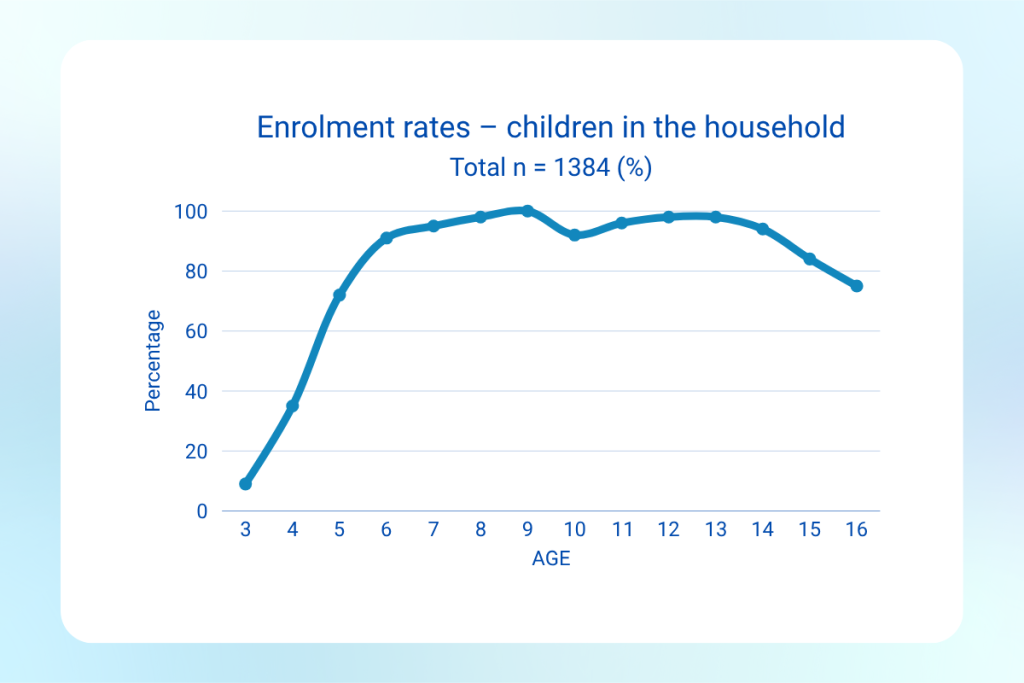
The study found two stages where children fall through the cracks as shown in Figure 1. First, enrollment rises sharply by age 5 (72%), but participation is very low earlier on, only 9% at age 3 and 35% at age 4. This was not due to willful neglect, but a lack of awareness about the value and timing of preschool. Missing out on pre-school has long-term consequences on school readiness.
Second, by the age of 16, 25% of adolescents leave school, driven by financial pressures, poor grades, and peer influence. Retention strategies therefore need to be strengthened to keep students in school.
Figure 1: Enrolment rates – children in the household
Empowering ECCD: knowledge to action
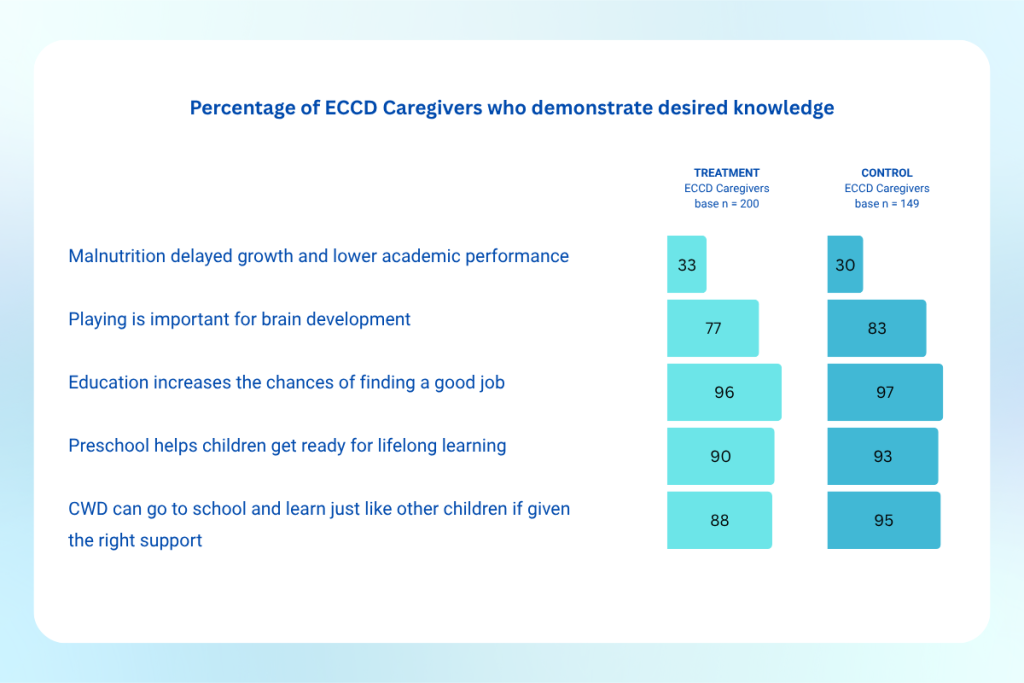
Caregivers demonstrated a strong commitment but often lack critical knowledge regarding ECCD, especially the developmental role of play-based learning and the early detection and consequences of malnutrition. Furthermore, while breastfeeding and feeding practices were generally positive, future interventions should focus on simple, low-cost, practical guidance, such as integrating learning through daily routines and improving nutrition awareness. Supportive incentives, like providing breakfast at preschool, can also help to alleviate economic barriers.
Figure 2: Percentage of ECCD Caregivers who demonstrated desired knowledge
Supporting adolescents: beyond good intentions
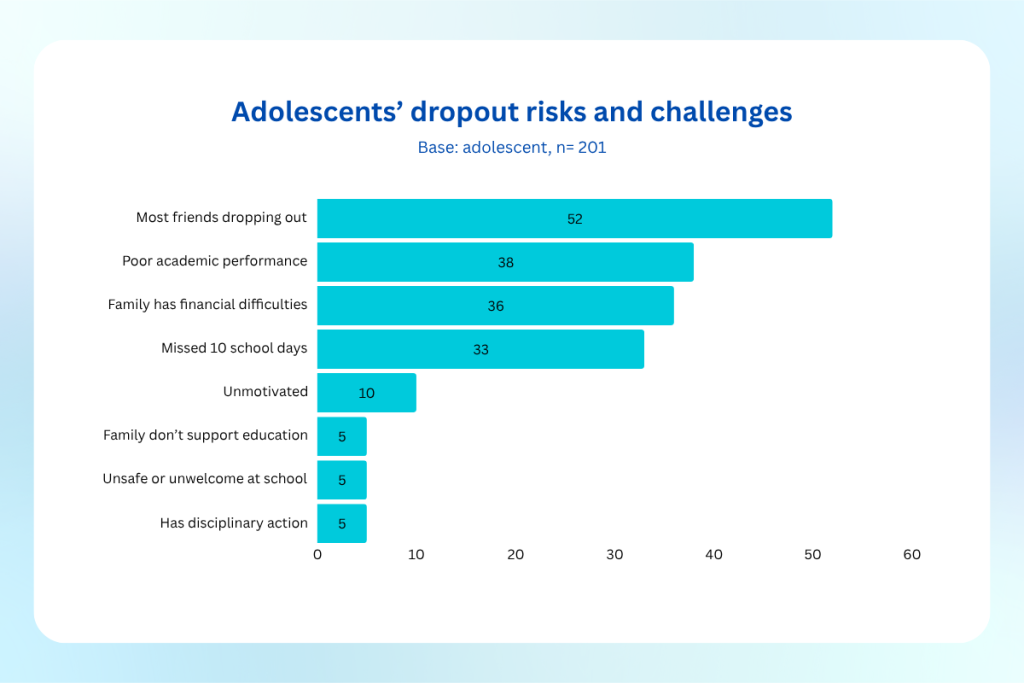
Adolescents value education but were found to struggle to stay enrolled due to financial pressure, lack of academic support, and the influence of peers who leave school (Figure 3).
Figure 3: Adolescents’ dropout risks and challenges
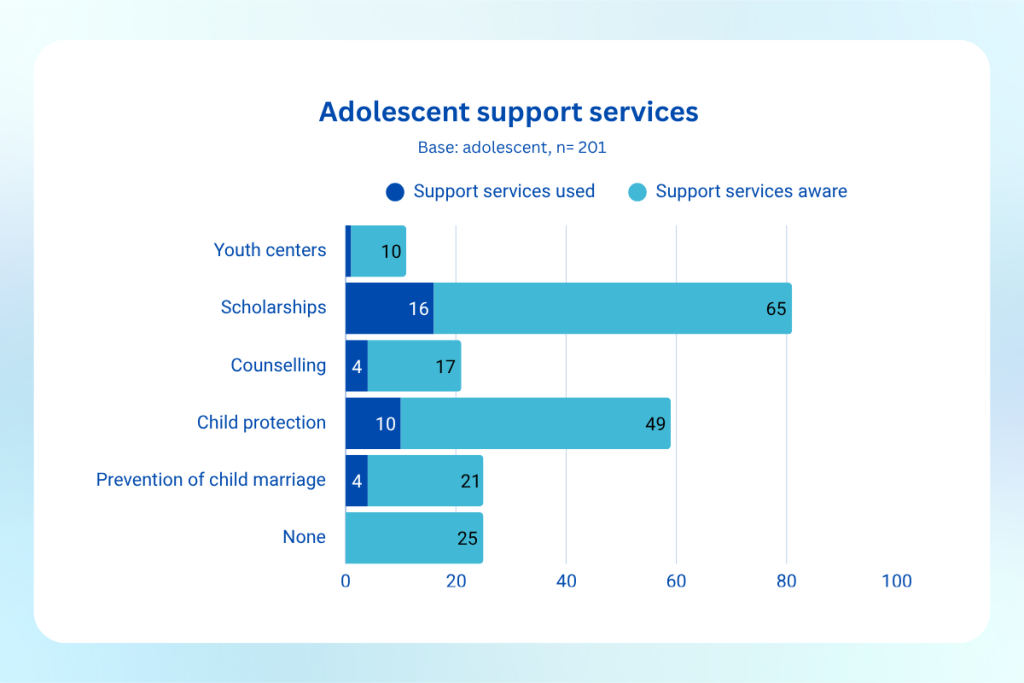
Services such as scholarships, counselling, and youth centers significantly improve outcomes, but are underutilized due to lack of awareness (Figure 4).
Figure 4: Adolescent support services
Inclusive futures and digital opportunity
The study also found positive attitudes towards inclusive education, particularly among children with disabilities and ethnic minorities, and shows a good foundation for inclusive programming. With 10-11% of households reporting a child with a disability, inclusion is not optional; it is essential.
For ethnic minority groups, preschool attendance was relatively high (53-55% for ages 3-5), but learning at home was limited due to low caregiver literacy and a lack of materials in indigenous languages. Meanwhile, with near-universal internet access, especially via Facebook and YouTube as trusted platforms, the internet is a potential channel for outreach and behaviour change campaigns.
Start early and stay the course
The underlying desire for education is strong, but the challenge lies in translating positive attitudes into consistent behavior due to economic and knowledge barriers. The path forward is to:
- Ensure every vulnerable child builds a brighter future by actively promote timely ECCD enrollment to establish strong cognitive foundations.
- To implement robust strategies to bolster adolescent resilience and retention through accessible support services and financial literacy.
By focusing on these areas, vulnerable children in Ratanakiri, Siem Reap, and Kampong Cham will have a better opportunities to unlock their full potential and build a brighter future for themselves and their communities. Furthermore, the messaging must: highlight long-term financial benefits of education, increase the visibility and access to support services, and strengthen parental engagement, especially from fathers, in academic and career planning. In addition, the engaged caregivers mean more confident and motivated students
Rapid Asia is highly committed to support sustainable and responsible business practices to make differences to our society. If you found this article useful, please remember to ‘Like’ and share on social media, and hit the ‘Follow’ button never to miss an article.
About the authors: Daniel Lindgren is the Founder of Rapid Asia Co., Ltd., a management consultancy firm based in Bangkok that specialises in evaluations for programs, projects, social marketing campaigns, and other social development initiatives. Supawadee Yodkaew is a Project Assistant at Rapid Asia.
Photo by hadynyah on iStock by Getty Images