
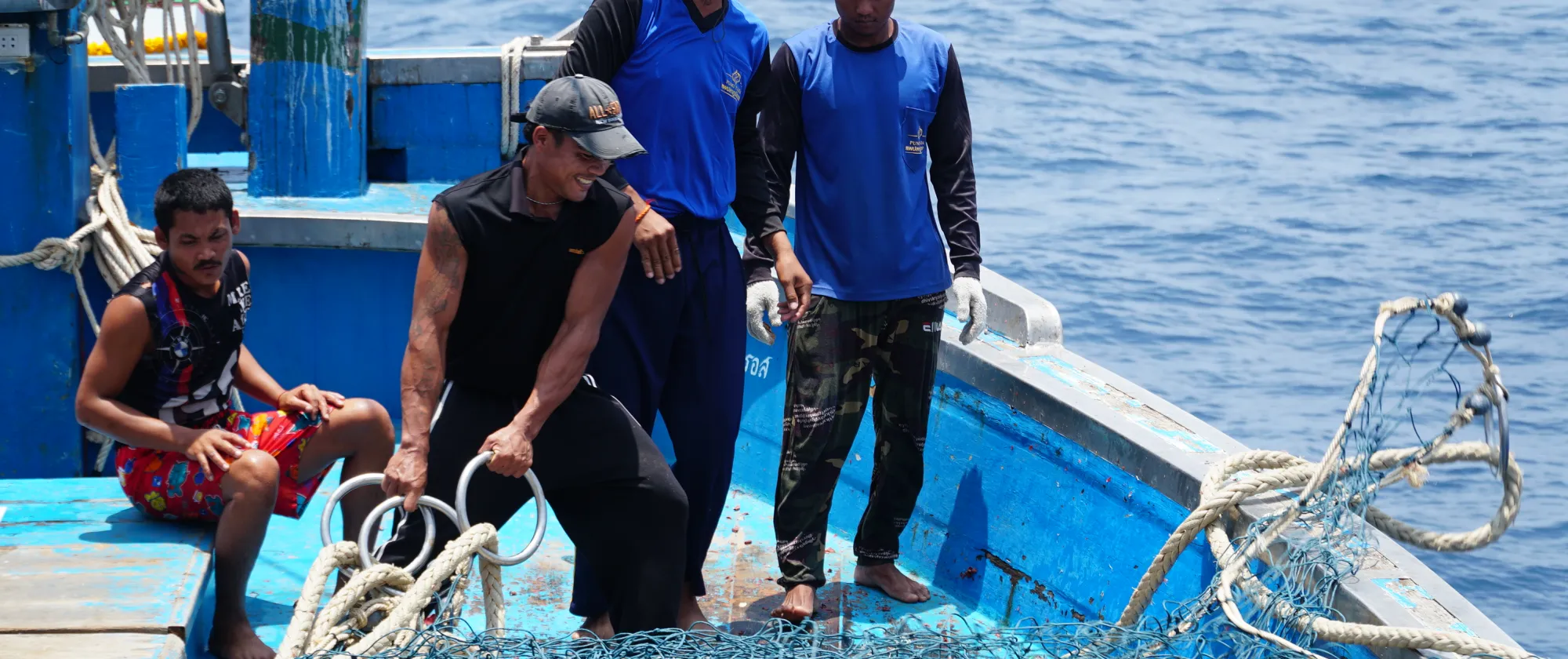
Migrant fisher on a Thai fishing vessel. © Pichit Phromkade/ILO
Southeast Asia is home to the world’s largest number of fishers and seafood workers, and millions rely on the fishing sector for their livelihoods. Migrant workers hold a significant share of jobs in this sector, making a significant contribution to the region’s economy. However, many migrant workers face serious risks and exploitation.
To provide an evidence base for interventions, Rapid Asia carried out a major baseline study for the ILO and the report was launched on 25 February 2026. The study was carried out with returned migrants in Cambodia, Indonesia, Myanmar, and Vietnam, to examine working conditions of migrant workers and the prevalence of forced labour in the fishing and seafood processing sector.
Recruitment
Most migrant workers (90%) relied on friends or family for information about migrating for work. However, migration often comes at a high cost. Around three in five workers took out loans or had wage deductions to cover recruitment fees, increasing their vulnerability to debt bondage.
Although nearly three-quarters signed written contracts and most held legal migration documents, protections were often weak in practice. Half of all respondents reported that their employers retained their identification documents, a potential risk factor for exploitation.
Work conditions
Wages varied significantly by destination and nationality. Migrant workers earned higher wages in more developed destinations such as the Republic of Korea and Japan, compared to Thailand, Taiwan, and China. While most fishers received fixed wages, irregular or delayed payment were common.
The report highlights serious occupational safety and health concerns. More than one in four migrant workers (27%) experienced a serious work-related injury requiring medical treatment as shown in Figure 1 below. Yet, only half had any form of social protection. Injuries were found to be associated with long working hours. Among those working more than 20 hours per day, nearly two-thirds (64%) reported injuries, compared to 20% among those working eight hours or less.
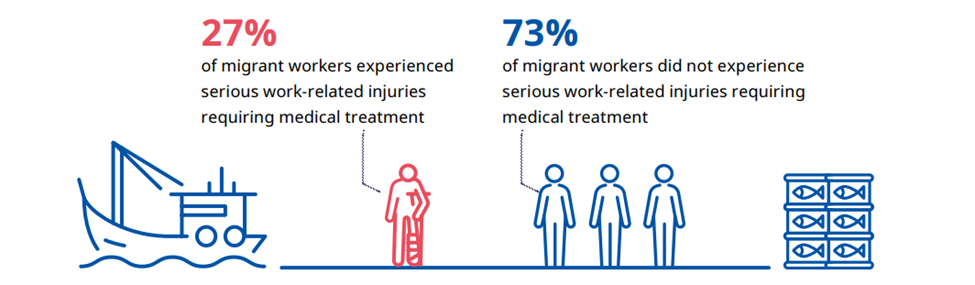
Figure 1: Occupational injuries requiring medical treatment
Trade union membership was as expected low with 4% overall, and 1% in Thailand — limiting workers’ ability to collectively advocate for better work conditions.
Prevalence of forced labour
The study estimates that one in eight migrant workers in fishing and seafood processing is employed in situations of forced labour, with significantly higher prevalence in the fishing sector.
Migrant workers who had experienced discriminatory treatment, were paid in a lump sum after more than three months, or worked 10 hours per day or more, were more likely to be in a situation of forced labour.
Long voyages also significantly increased vulnerability to forced labour. Among fishers working on vessels that remained at sea for six months or more, over one-third experienced forced labour conditions. Despite this, very few sought or had means to seek assistance as shown in Figure 2 below.
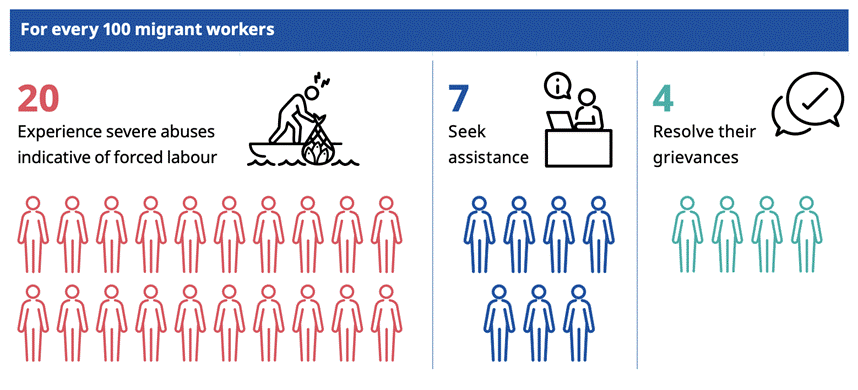
Figure 2: Migrant workers’ experiences of forced labour
What needs to change?
The study makes it clear that stronger labour and migration governance is urgently needed and highlights three priority areas:
- Ratify and fully implement key international labour standards
- Reform labour migration and recruitment systems
- Strengthen freedom of association and collective bargaining rights
Reform in these areas could help establish better protections for migrant workers and move the region closer to achieving decent work in the blue economy. See full report.
If you found this article useful, please remember to ‘Like’ and share on social media, and hit the ‘Follow’ button never to miss an article. You may also be interested to read our previous study on migrant workers in the Thai fishing sector here.
About the authors: Daniel Lindgren is the Founder of Rapid Asia Co., Ltd., a management consultancy based in Bangkok specializing in evaluations for programs, projects, social marketing campaigns, and other social development initiatives.